
At work with Jenna York and Rob Orr of the Biospecimen Management Core
Jenna York, Rob Orr, and their teams are responsible for managing tens of millions of research specimens stored in dozens of freezers spread across multiple facilities.
Together, under director Jill Reiter, PhD, they run the Indiana CTSI’s Biospecimen Management Core. The core consists of the Specimen Storage Facility (SSF), which York manages, and the Clinical & Translational Support Laboratory (CTSL), which is managed by Orr. Their clients are investigators from Indiana University and Purdue University conducting medical research with funding from the National Institutes of Health, the U.S. Army, the Michael J. Fox Foundation, and many more.
Both Orr and York oversee highly complex and sensitive systems that ensure the preservation of the specimens.
“While this is a support role, it’s foundational to the research. It’s so important to keep the specimens safe,” York said.
“Each sample represents someone’s time, effort, data. It’s extremely important,” Orr agreed. “Losing even one sample is something we don’t accept.”


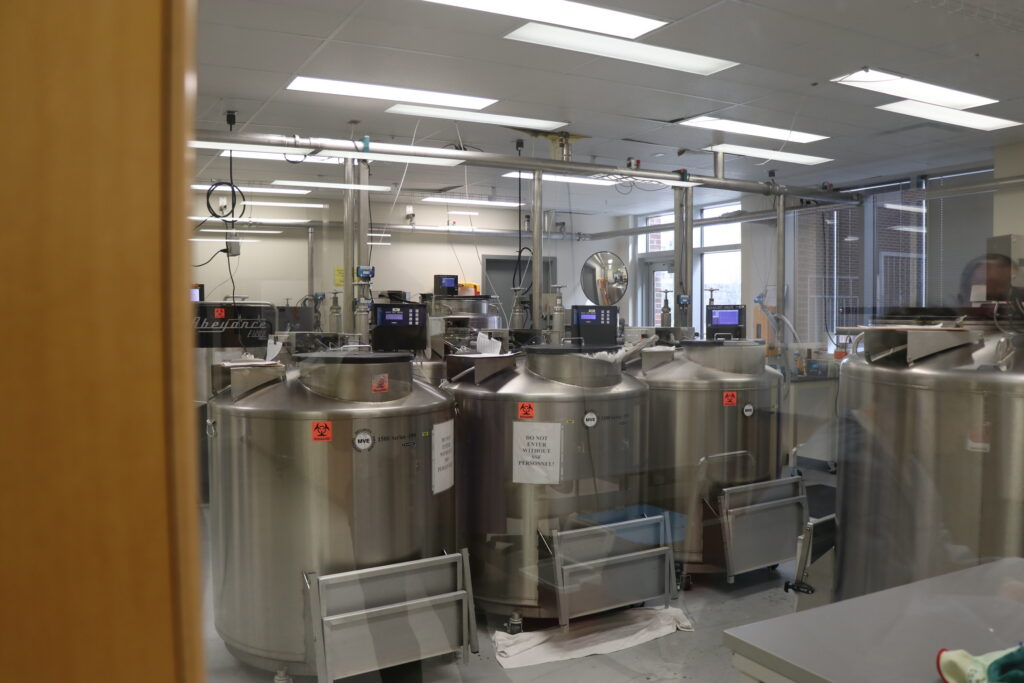
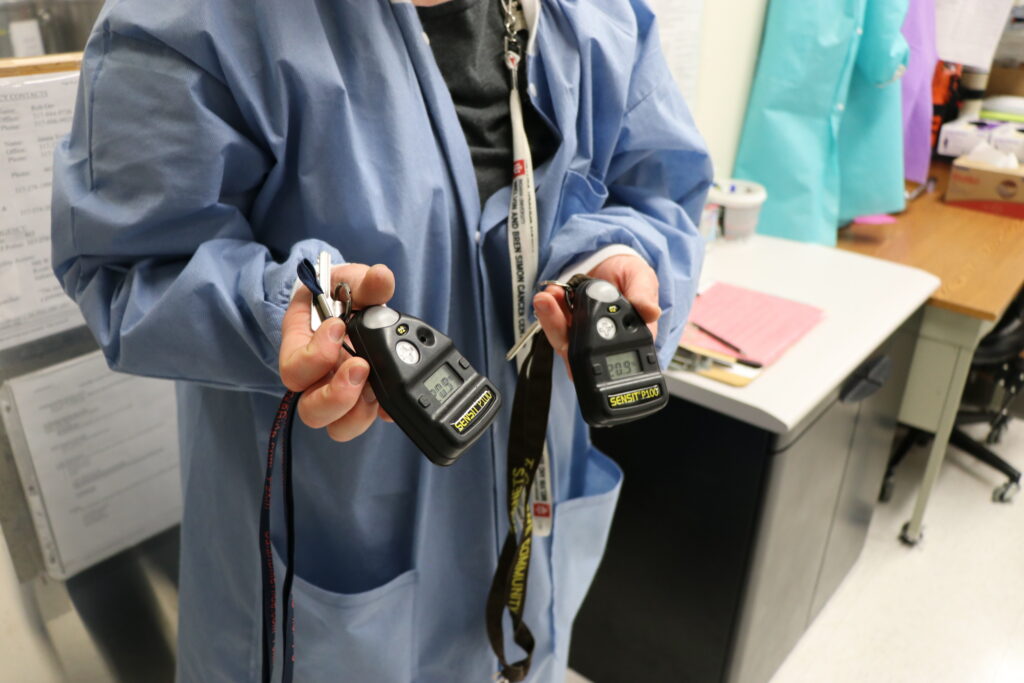


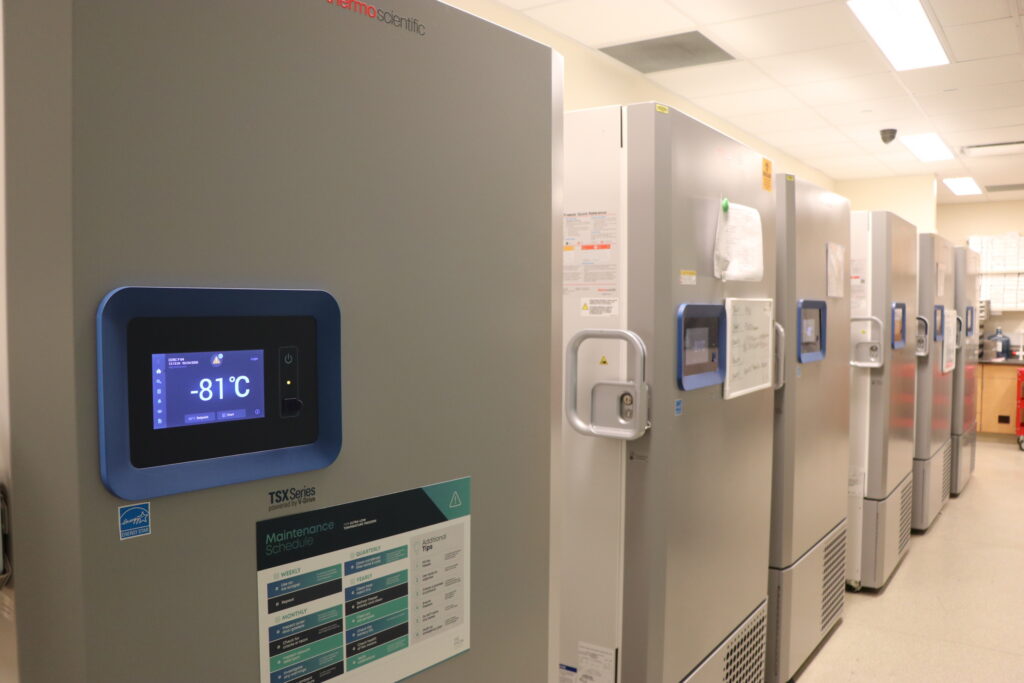
York, Orr, and their teams at the SSF and CTSL facilities in Indianapolis. Photos by Jess West.
York was a stockbroker before she pivoted to a role in the Department of Psychiatry at IU School of Medicine in 2001. She joined the staff of the Indiana CTSI in 2012, and she spent a year as coordinator of the Access Technology Program before moving into the SSF manager role, which she has held ever since.
York says she enjoys all the variety in her day-to-day work. She gets to support critical research, troubleshoot and solve problems in a dynamic environment, and work with a great team of three dedicated technicians.
“The SSF is an engaging place to work, and the staff are amazing,” York said.
Orr describes the CTSL as a hub for processing specimens. He has been manager of the CTSL since 2012, which employs five staffers.
He says the people he works with, both researchers and lab staff, are the best part of his job.
“The people here really care about what they do,” he said. “Research can be a grind, and when we get to hear about the successes—that research we supported is changing people’s lives for the better—that’s so rewarding.”
