Renzhi Han, who was mentored by this year’s Watanabe awardee, will showcase gene therapies for Duchenne muscular dystrophy at the 2026 Indiana CTSI Annual Meeting
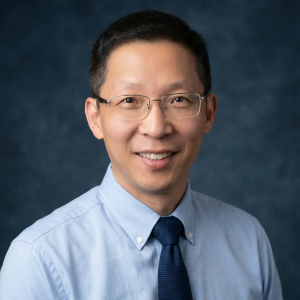
Renzhi Han, PhD, professor at the Indiana University School of Medicine, will present his laboratory’s latest research on developing base editing therapies and full-length dystrophin gene therapies for Duchenne muscular dystrophy (DMD) at the 2026 Indiana CTSI Annual Meeting.
The theme of the meeting is “Genetic Medicine from Sequence to Solution.”
Han’s work focuses on creating innovative adeno-associated viral (AAV) vectors and non-viral delivery approaches that could provide lasting genetic correction for patients with inherited muscle diseases.
His interest in muscular dystrophy research began more than two decades ago during his postdoctoral training in the laboratory of Kevin Campbell, PhD, at the University of Iowa. Campbell is the winner of the 2026 August M. Watanabe Prize in Translational Research, and the keynote speaker at this year’s Annual Meeting.
Han said that his path into this field began during his early research with Campbell in muscle physiology and disease.
From 2003-2009, Han studied how dystrophin and its associated protein complex protect muscle from injury, how muscle cells repair membrane damage, and how failures in those processes contribute to disease.
“I became fascinated by the complex mechanics of muscle tissue and deeply moved by the devastating impact that single-gene defects have on patients and families living with genetic myopathies,” he said.
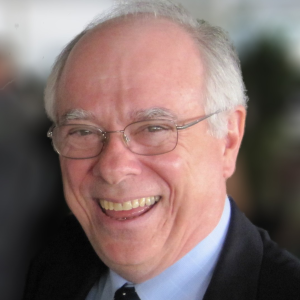
Working with Campbell, Han co-authored several influential studies that advanced scientists’ understanding of muscular dystrophy and muscle membrane repair. Those discoveries helped establish the biological foundation for many of today’s emerging therapeutic approaches.
“Working in Dr. Kevin Campbell’s laboratory was a defining chapter in my scientific career,” Han said. “Kevin is an extraordinary mentor whose groundbreaking discoveries in muscle biology and the molecular pathology of muscular dystrophies set the gold standard for translational research.”
Han said Campbell shaped his scientific expertise, as well as his approach to solving complex problems.
“From Kevin, I learned how to tackle complex questions with uncompromising standards, lead a collaborative team, and remain relentlessly focused on our scientific goals,” he said. “His mentorship fundamentally shaped how I approach research, direct my own laboratory, and guide the next generation of scientists.”
Today, Han’s laboratory is translating those lessons into the development of precision gene therapies aimed at treating genetic muscle diseases. He hopes his presentation will highlight the promise of emerging technologies to deliver durable genetic corrections and improve outcomes for patients with Duchenne muscular dystrophy and related disorders.
You can hear Han, Campbell and other leading researchers speak at the 2026 Annual Meeting on September 18. Learn more on the event page and register today.
