Lauren Magee, former Indiana CTSI K Scholar, awarded William T. Grant scholarship for her work on youth firearm injury reduction
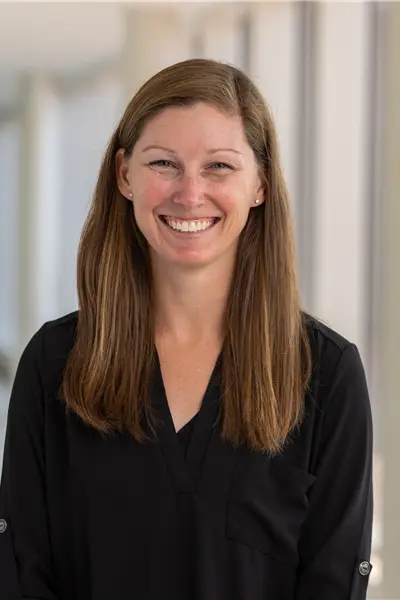
Lauren Magee, PhD, assistant professor of pediatrics, is building on her earlier work as an Indiana CTSI KL2 scholar to meaningfully support young victims of gun violence.
Magee is the co-creator of the Indianapolis Nonfatal Shooting Advocacy Program, which provides outreach and resources to victims and families affected by non-fatal firearm injuries in Indianapolis. Her work over the years has culminated in her recently being announced as one of seven new William T. Grant Scholars. This national award provides scholars with $425,000 to further their research over the course of five years.
Magee has also been the recipient of multiple NIH funded grants, including an R21 and R03, both of which began in 2024. The projects continue to build on the work of improving outcomes and supporting individuals, families, and communities impacted by violence.
In 2021, Magee was named an Indiana CTSI KL2 Scholar for her project “A Mixed-Methods Approach to Improving Behavioral Health Outcomes of Nonfatal Firearm Injury Victims.”
Magee “exemplifies the Indiana CTSI mission of transforming research into better health for individuals and communities,” said Sarah Wiehe, MD, MPH.
Wiehe, who is co-director of the Indiana CTSI, served as a mentor for Magee during her time in the KL2 program, along with Matt Aalsma, PhD, who is now the director of the implementation science program.
“The Indiana CTSI KL2 award played an important role in her development as an independent investigator, and her subsequent NCATS R03 award reflects both the quality of her translational research and her contributions in the field of translational science,” Wiehe said.
Magee has continued to collaborate with Wiehe and Aalsma on further Indiana CTSI-supported projects in the field of firearm safety, including the iDOVE project for which she consulted a Project Development Team and received a Trailblazer Planning Grant award.
“Mentoring Lauren has been incredibly rewarding because she embodies what it means to be a translational scientist,” said Wiehe. “She is deeply committed to addressing the impact of firearm violence on children, families, and communities, and her research focuses not only on understanding these challenges but also on developing practical evidence-based interventions that improve lives.”
